How Wide Should a Men’s Wedding Band Be? A Guide to 4mm, 5mm, 6mm and 8mm Rings
Why Band Width Matters
A men’s wedding band width guide Australia shoppers can actually use starts with one simple point: width changes almost everything about how a ring feels and looks. A 4mm ring and an 8mm ring may be made from the same 18ct yellow gold, in the same finger size, with the same finish, yet they will read as completely different pieces of jewellery.
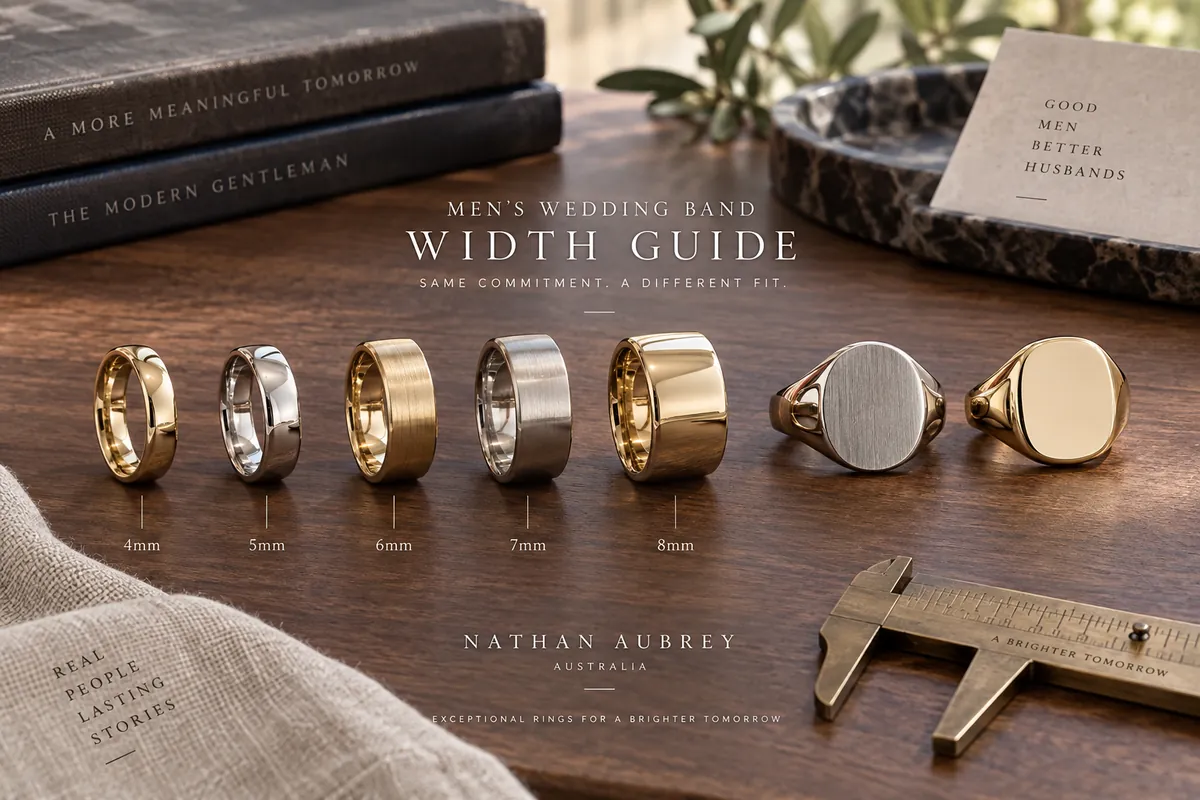
Width is measured across the face of the band, not around the finger. A 4mm band covers a relatively narrow strip of skin. A 6mm band gives a more familiar, balanced wedding-ring profile. An 8mm band is broad, definite and generally the first thing people notice when you shake hands. None is inherently “more masculine”, despite what old-school jewellery counters sometimes suggest. The right width is the one that suits your hand, your comfort and the amount of visual weight you want to wear every day.
Hand proportions matter. Broad hands and longer fingers often carry a 6mm or 8mm band comfortably, while a narrow hand can find an 8mm ring visually dominant. But that is a starting point, not a rule. A compact hand can look excellent with a wide band if the wearer likes a stronger shape, while someone with large hands may prefer the clean restraint of 4mm.
There is also a practical difference. Wider rings touch more skin, so they can feel firmer than a narrow band in the same nominal size. If you have never worn a ring, that extra contact can be noticeable in the first few weeks. A comfortable-fit interior helps, but width still has a say.
Choosing Your Width
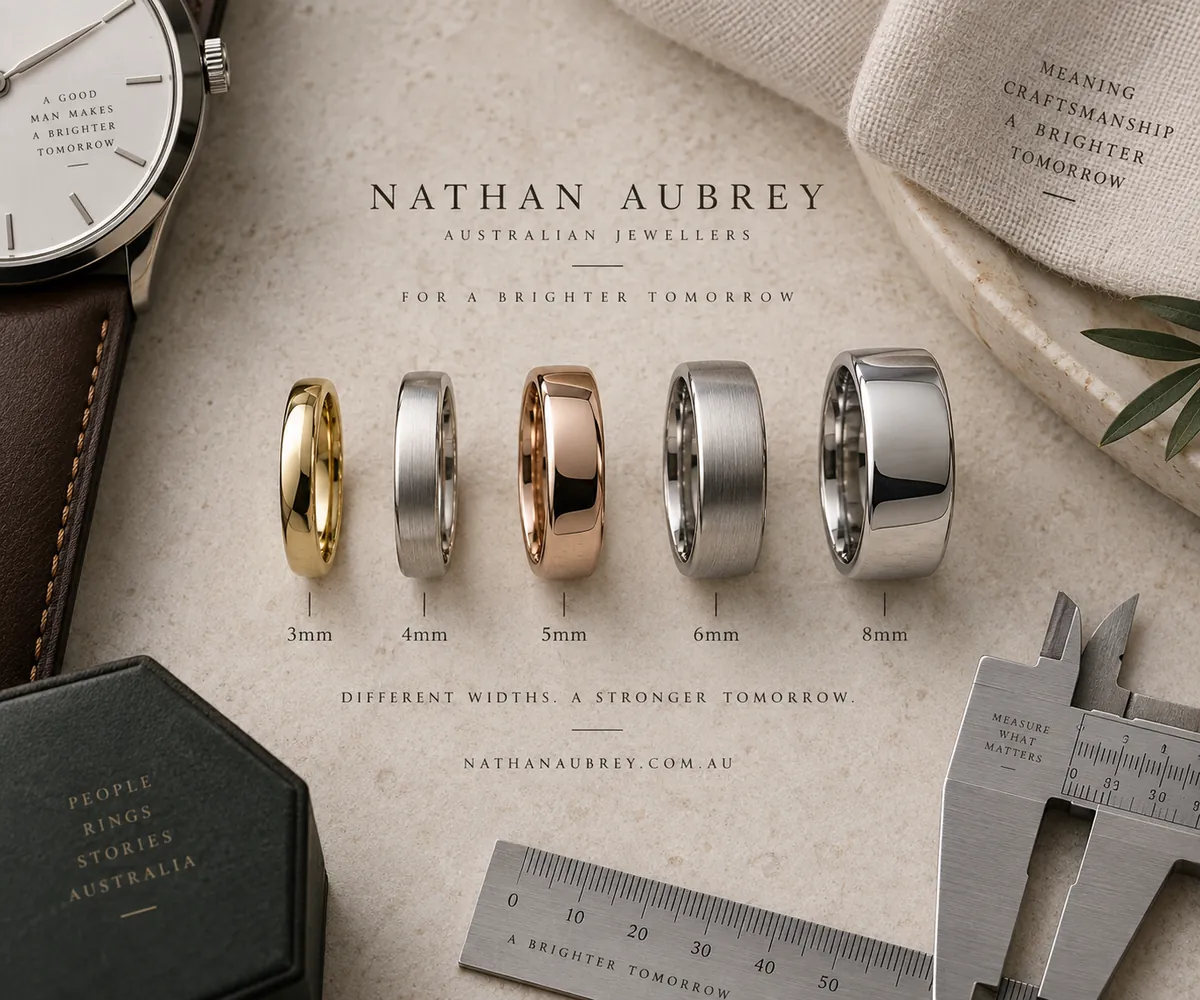
If you want the short version, 5mm and 6mm are where most men should begin. They suit a wide range of finger sizes, work with plain or detailed designs, and don’t feel like a compromise. The best way to choose is to compare physical samples in at least two widths. Looking at a product image on a phone tells you surprisingly little about how the band will sit on your hand.
Is a 4mm wedding band right for you?
A 4mm band is slim, neat and easy to wear. It suits men who prefer understated jewellery, have shorter or slimmer fingers, work with their hands, or simply dislike the sensation of a wide ring. In platinum or 18ct gold, 4mm still looks considered and valuable. It is not a “small” choice, it is a clean one.
Choose 4mm if you want the wedding band to sit quietly beside a watch, bracelet or signet ring. It is also a sensible width for someone who has spent decades without jewellery and wants an uncomplicated start.
Is a 5mm wedding band right for you?
At 5mm, a band gains presence without becoming heavy. It is perhaps the most adaptable width in this men’s wedding band width guide Australia couples can use. A 5mm flat band looks crisp and contemporary; a 5mm rounded court profile feels traditional without looking dated.
It also works well for engraving. If you are considering initials, a wedding date or a short phrase, the extra face width gives a craftsperson more room while keeping the ring restrained. For inspiration, see these wedding band engraving ideas.
Is a 6mm wedding band right for you?
A 6mm band is the classic middle-ground choice for men who want their wedding ring to be visible. It is broad enough for a brushed finish, bevelled edges, a central groove or a small diamond detail, but it usually remains comfortable for daily wear. For many hands, it has the visual balance people expect from a traditional men’s wedding ring.
A 6mm yellow gold ring has warmth and presence, particularly in 18ct gold. Browse yellow gold men’s wedding rings to see how finish and profile alter the character of this dependable width.
Is an 8mm wedding band right for you?
An 8mm band is a statement, and that is precisely why some men love it. It has enough surface area for a brushed centre, polished edges, patterned engraving or a diamond setting that does not look lost. On a larger hand, an 8mm ring can feel perfectly proportioned. On a smaller hand, it can still work, but try it properly before ordering.
Be honest about your routine. If you work on tools, type all day, lift weights, play guitar or frequently put on gloves, an 8mm band will be more noticeable. That does not make it impractical. It simply means comfort deserves more than a 30-second try-on at a jeweller’s counter.
Styles and Metal Choices
Width and profile work as a pair. A flat 6mm ring shows its full width edge to edge, so it can appear broader than a 6mm rounded court band. A bevelled profile narrows the visual centre and adds definition. A comfort-fit interior has a gently rounded inner edge, which often makes a 6mm or 8mm band easier to slide over the knuckle.
Gold gives a broad band colour and warmth. In particular, gold men’s wedding rings in a 5mm or 6mm width have a classic Australian wedding-band look. Yellow gold shows polish beautifully, while white gold gives a cooler, more reserved finish. You can compare the latter through the white gold men’s wedding ring collection.
Platinum is dense, naturally white and particularly satisfying in widths from 5mm upwards. Its weight is part of the appeal: a 6mm platinum ring tends to feel more substantial than the same design in gold. Explore men’s platinum wedding rings if you want that solid, low-key luxury. A narrow platinum band is elegant, but the metal really comes into its own when there is enough surface to appreciate its colour and finish.
Silver offers a brighter, more casual look and can make sense for a simple band, especially at 4mm or 5mm. The men’s silver wedding ring range shows how a clean profile can carry the ring without needing decorative extras. For a little more detail, consider silver diamond wedding rings, where a wider face gives the stone room to be intentional rather than accidental.
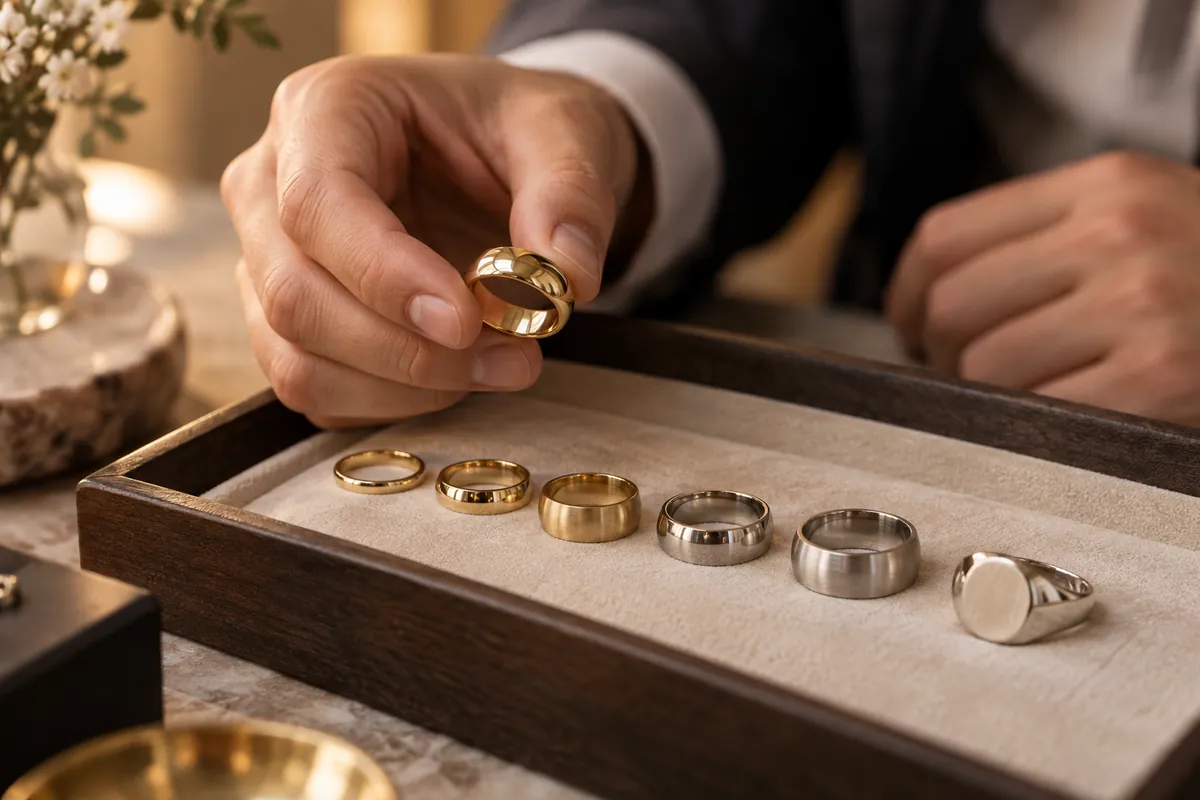
Finishes are worth discussing early. Polished bands reflect light and show their width clearly. Brushed or satin finishes soften the effect, making an 8mm band feel calmer and a 4mm band feel more textured. A polished bevel against a brushed centre is a good answer for someone who wants detail without an ornate design.
Before You Buy
First, get the size right at the intended width. A ring size taken with a narrow plastic sizer is useful, but it is not the final word for an 8mm band. Wider rings can need a modest adjustment because they meet more of the finger. A proper ring sizer is a sensible first step, then confirm with a sample close to your preferred width and profile.
Measure at a normal time of day. Fingers can swell after exercise, in hot weather, after a salty meal, or during a long flight. Brisbane humidity has convinced plenty of people that their ring suddenly shrank overnight. It did not. Their finger changed temporarily, which is why a considered fitting matters.
Think about the knuckle too. If your knuckle is much larger than the base of your finger, a comfort-fit interior can make a wider ring far easier to put on and remove. Don’t choose a too-loose size merely to get it over the knuckle, as it will rotate and feel less secure afterwards.
Metal purity affects colour, hardness and value, but it should not be reduced to a stamp you barely notice. Before buying gold or platinum, read this practical guide to Australian gold and platinum hallmarks. It is useful to understand what 9ct, 18ct and platinum markings mean before comparing rings that look similar in a photograph.
For ring care, keep expectations realistic. Precious metals develop fine marks with wear, particularly on a polished broad band. That is not a fault; it is the record of a ring being worn. The Gemological Institute of America offers general jewellery education and care information at GIA, while the World Gold Council is a useful reference for gold’s enduring place in jewellery and culture.
Expert Tips
Try on a 4mm, 6mm and 8mm band in one appointment, even if you feel certain about one width. Put each on your dominant hand, look at it from arm’s length, then make a fist and use your phone for five minutes. The ring you admire under showroom lighting is not automatically the ring you will enjoy while carrying groceries or answering emails.
Choose the width before obsessing over minor surface details. A plain 6mm band in the right metal will age better in your mind than a heavily detailed 8mm band bought because it seemed exciting for ten minutes. Wedding rings are unusually personal objects, but they are also everyday tools. Comfort wins.
If you already wear a signet ring, consider the conversation between the two pieces. A wide wedding band and a substantial signet can look excellent together, but leaving some contrast in finish or finger placement keeps the result from feeling crowded. The men’s gold signet ring collection is helpful reference material if you are building a considered ring wardrobe rather than buying in isolation.
Finally, do not buy a narrow band because somebody says it is discreet, or a wide one because somebody says it is masculine. A 5mm ring can be quietly confident. An 8mm ring can be wonderfully simple. The best choice is the one that feels right on your hand after the novelty has worn off.
FAQ
What is the best men’s wedding band width guide Australia?
A useful guide starts by comparing 4mm, 5mm, 6mm and 8mm samples on your own hand. For most men, 5mm or 6mm offers the best balance of comfort, proportion and visible presence, though a 4mm or 8mm band may better suit your hand and personal style.
How do I know which men’s wedding band width guide is right for me?
Try several widths in the metal and profile you are considering, rather than relying on finger-size charts alone. Look at the ring from a normal viewing distance and wear it long enough to notice how it feels when your hand is closed, typing or holding something.
What should I look for when buying men’s wedding band width guide?
Check width, profile, comfort-fit interior, precious-metal marking and how the ring fits over your knuckle. Also consider your daily work and whether you prefer a polished, brushed, flat or rounded finish, as each changes how the same width appears.
Are there budget-friendly men’s wedding band width guide options?
Yes. A straightforward 4mm or 5mm silver band uses less metal than a broad platinum design while still offering a clean, traditional look. Keep the design simple and put your budget toward correct sizing, a comfortable profile and quality precious-metal construction.

